Week 1
Project: Leaning Bodies for Ages
Development Phase: Jungle Dance Studios; Goa, India. Independent Research.
Week #: 1
Dates: 3, 4 and 5 March 2026
Space Type: Dance studio
Working Toward: Exploration. Initial phases.
RESEARCH FOCUS
This week is early studio research. I am working alone and building a physical base for the solo. The main questions are around direction, weight, and organisation of the body. I am trying to understand where my movement begins and how the rest of my body follows. I am also looking at how my spine, hips and head organise the whole system.
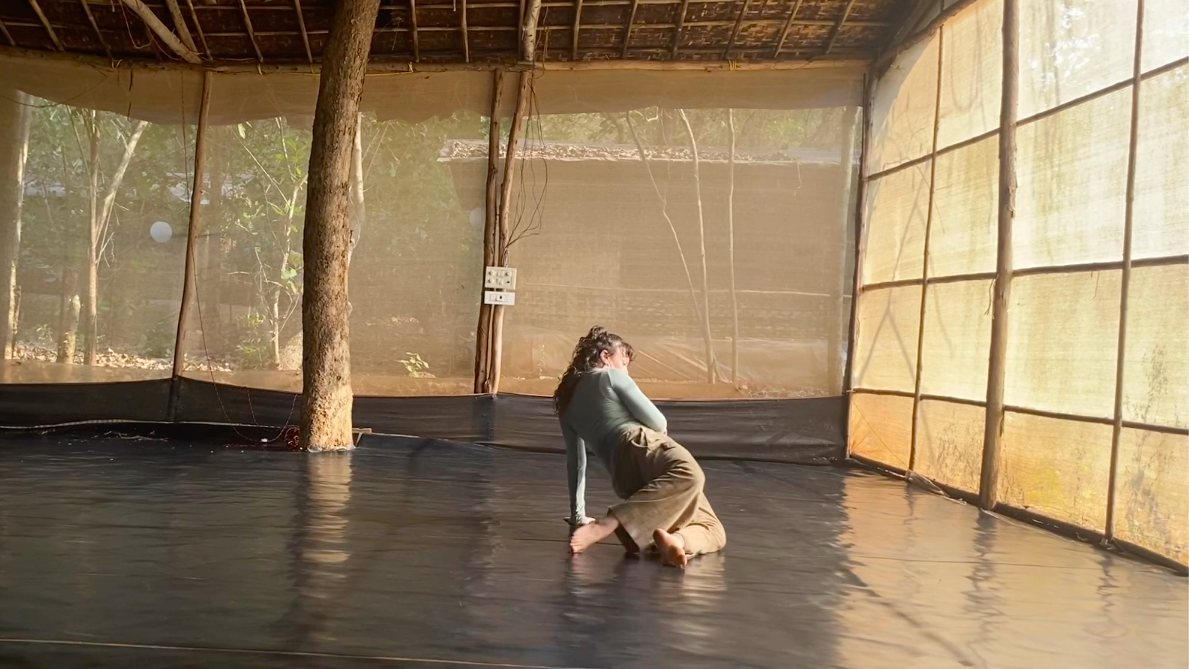
Physical Investigation
Key movement areas explored:
Handstands and inversions
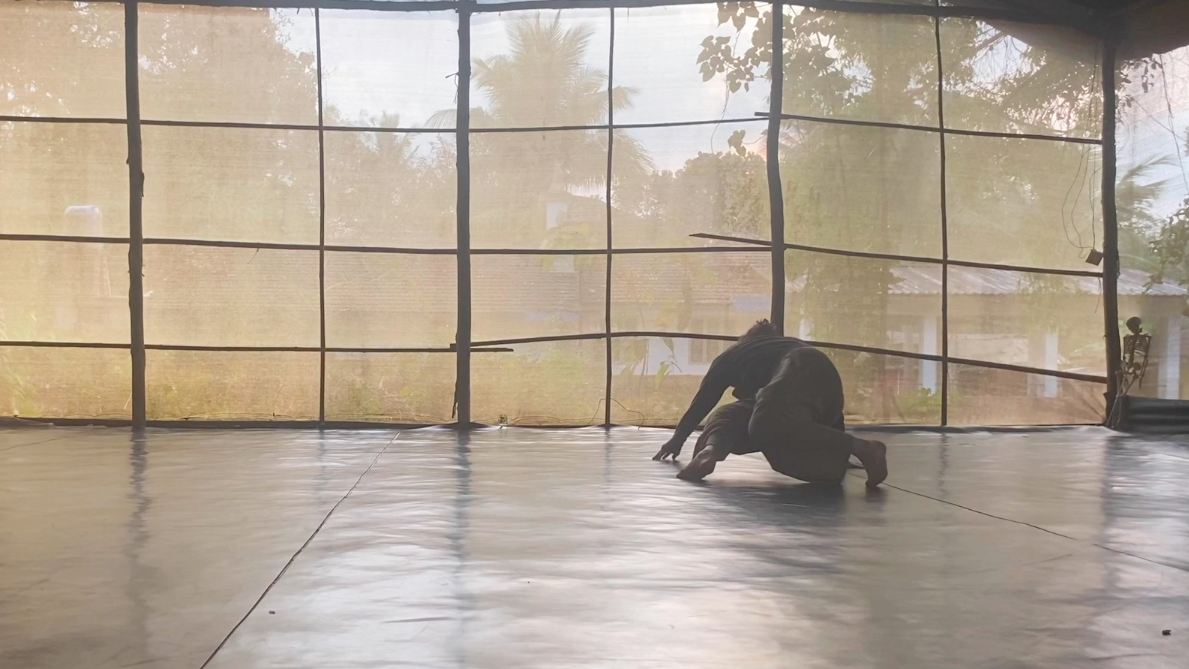
Floor pathways and rolling - the head connected to the spine
Direction-based improvisation (what body part leads)
Straight spine vs liquid spine movement
Hip mobility and lifting the hips off the floor
Leaning, imbalance and shifting weight
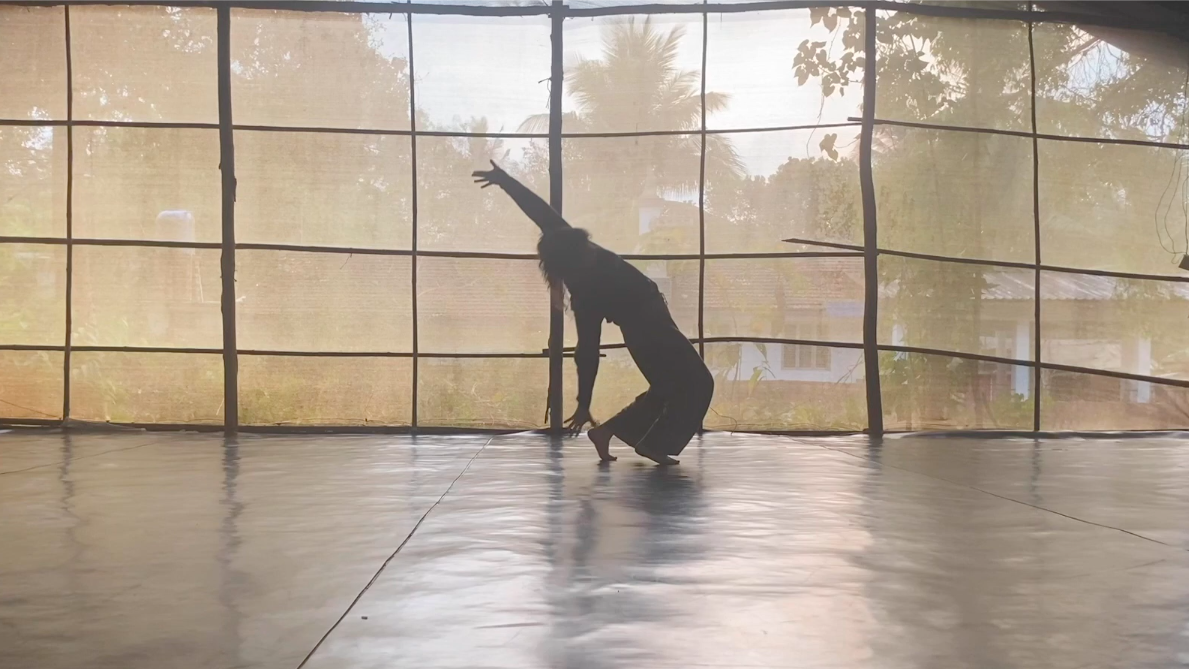
Creative Development
Improvisation was the main tool this week.
I tested several scores:
Direction – movement led by a specific body part
Straight spine – restricting the spine to test pathways
Liquid spine – letting the spine constantly shift
Weight and leaning – using imbalance to initiate movement
Some dramaturgical ideas appeared around identity and self-perception, but this is still loose. Right now, the focus is mostly physical.
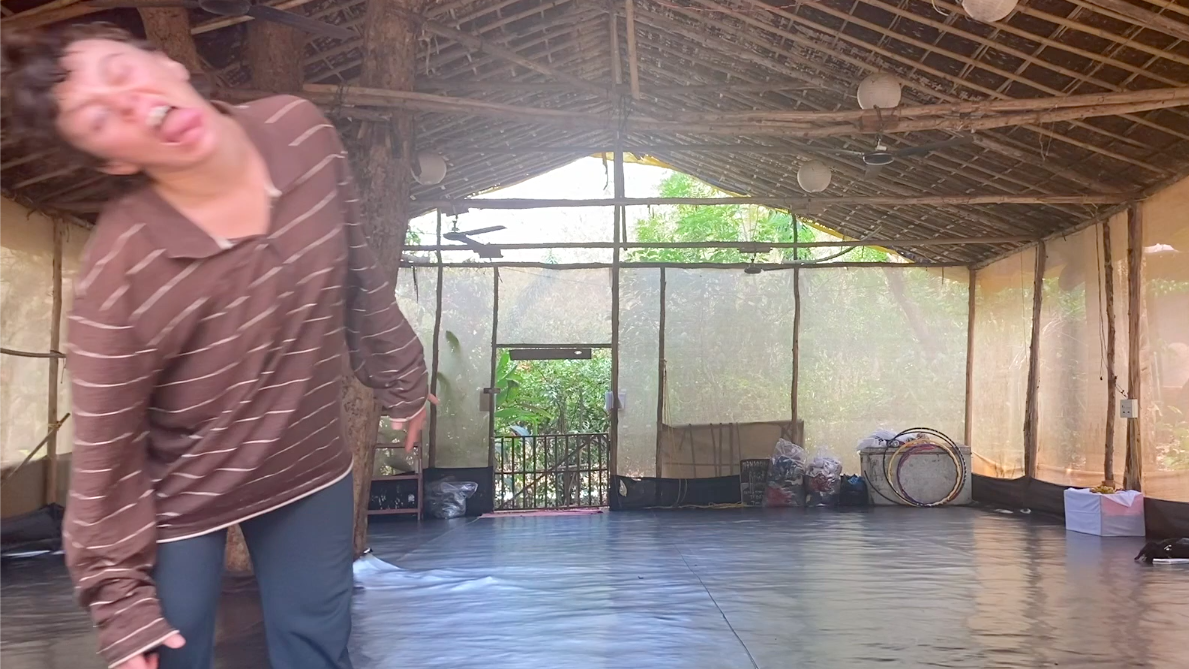
Site + Environment Influence
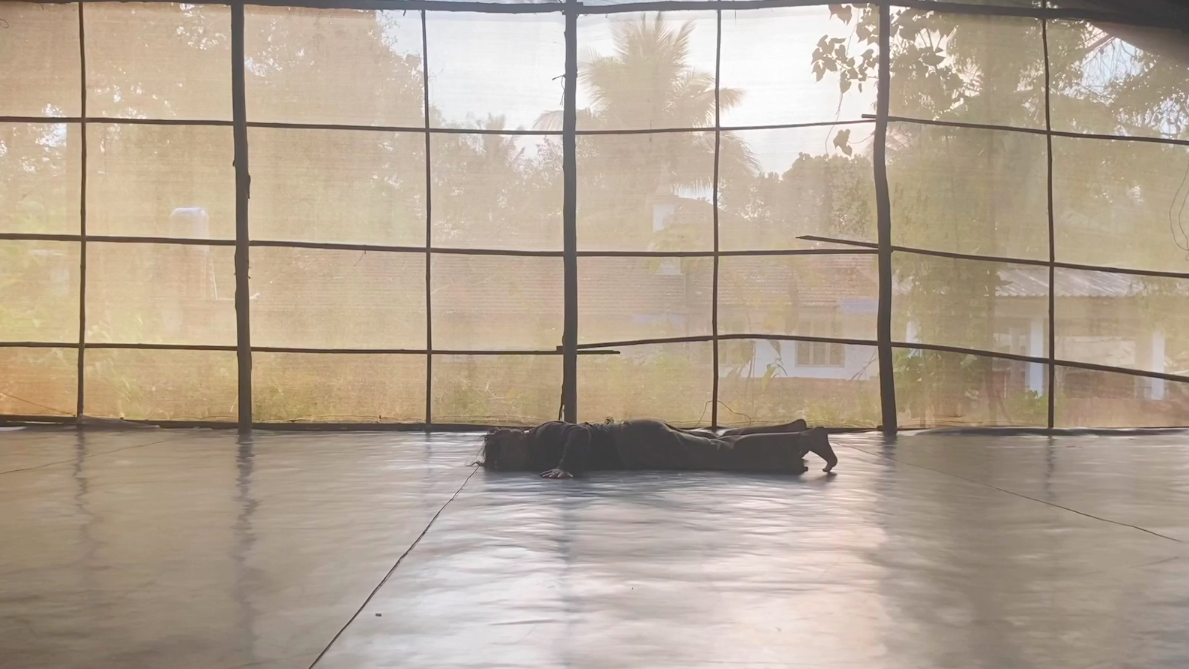
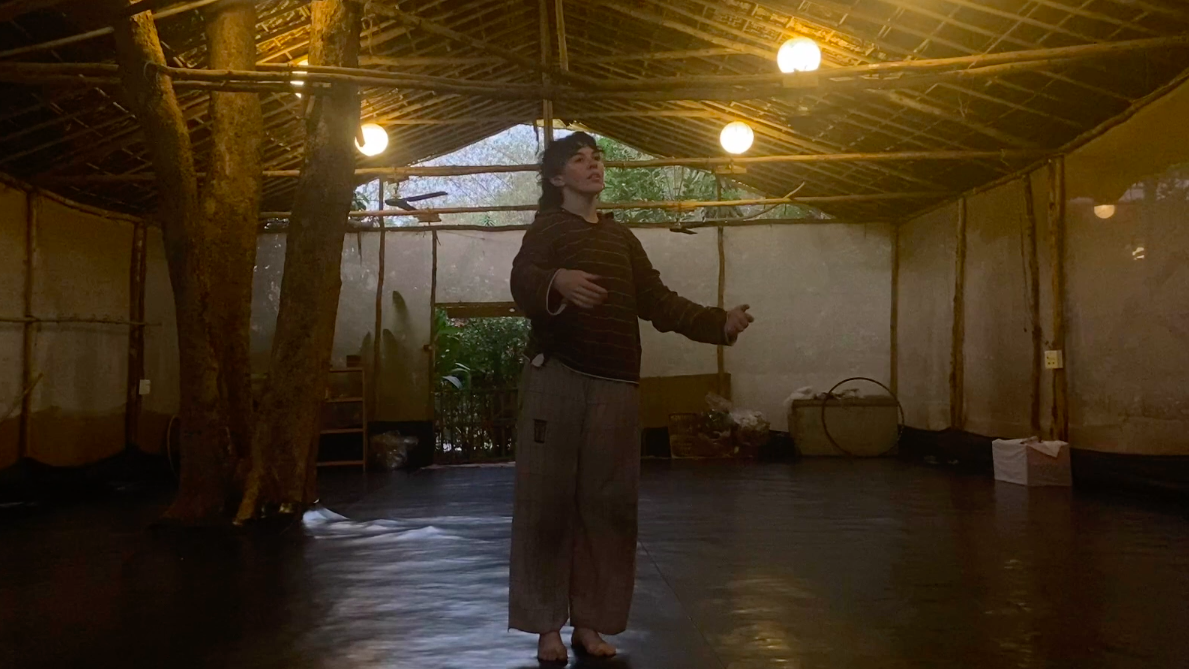
I worked in the same studio all week. Jungle Dance Studios in Arambol.
The floor is good for sliding and rolling, but I need long clothing to move well. The weather is getting hotter in Goa, which affects stamina. Hydration and rest are important.
The studio is closed during my sessions, so the environment is quiet and focused.
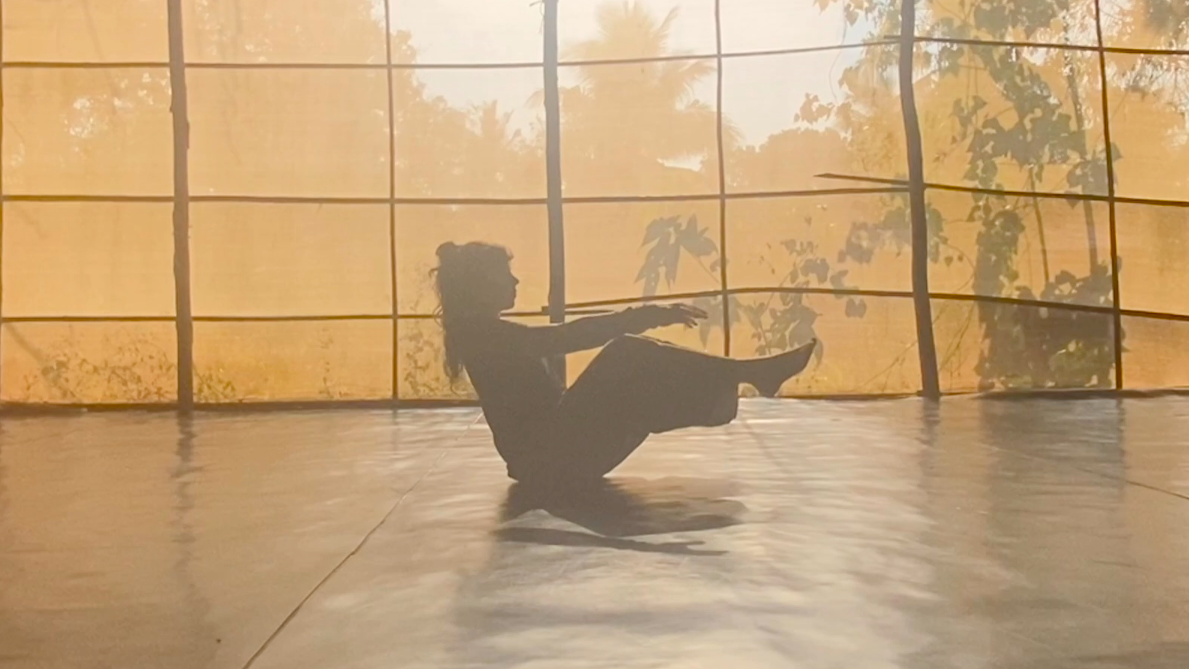
Observations & Reflections
A lot of the work is about organisation of the body. When I let a body part lead, new pathways appear. When I try to control everything, the movement becomes heavy and predictable. My hips are still the biggest challenge. They hold tension and affect balance, direction and floorwork.
Documentation
I film my sessions as a way to record progress over time and to practice moving in front of a camera. I only share my physical explorations.
Direction W1S1: https://youtu.be/jtakuDFFavE
Liquid Spine W1S1: https://youtu.be/NsuY3Fa_u5w
Straight Spine W1S1: https://youtu.be/Bj8iXEVPzLg
Direction W1S2: https://youtu.be/_HLqdKB8CLw
Light Hips W1S2: https://youtu.be/AxvdcmRyQbM
Straight Spine W1S3: https://youtu.be/2i6-dbZ19BA
Key Discoveries
Using my face and relaxing my jaw helps me stay engaged while improvising
Breathing in handstands makes them feel easier and more playful
Organising the body after initiating movement creates more interesting pathways
Resting on the floor for 10–15 minutes can reset my energy
Direction does not only travel through space — it can twist and rotate through the body
Weekly Summary
This week focused on building a physical base through solo studio sessions. I worked a lot on handstands, floorwork and directional improvisation. My handstands improved and feel more stable. I am starting to understand how movement changes when a body part clearly leads. The biggest challenge remains my hips — they feel heavy and tense and affect many pathways. Creatively, the idea of who I am before meeting another body is becoming an interesting question. Next steps are to keep developing direction, connection between head and pelvis, and clearer organisation of the whole body.
End of Week Notes
Total Sessions Completed: 3
Main Technical Progress: Handstands, directional awareness, shoulder mobility
Creative Material Generated: Direction improvisation score, straight spine score
Emerging Themes: Direction, body organisation, identity before contact
Next Week Priority: Head-pelvic connection and directional pathways
What changed in my understanding of the work: Movement becomes clearer when the body organises itself around a leading point
Recurring questions: Where does movement start? How can the hips become lighter? Who a I before contact with another body?
Next Week Direction
Continue working with direction improvisation
Build stronger head–spine–pelvis connection
Test speed and momentum, not only slow movement
Keep developing handstands and floor pathways